
A Mempool (short for memory pool) is a core component of most blockchain systems. It acts as a temporary holding area for transactions that have been broadcast to the network but have not yet been confirmed and permanently added to the blockchain.
To understand why mempools matter, it helps to first understand how blockchains like Bitcoin and Ethereum process transactions. When you send a transaction—say, transferring coins to another wallet—it doesn’t immediately get written into a block. Instead, it first travels across the peer-to-peer network and enters the Mempool of participating nodes.
What exactly is a mempool?
A Mempool is a node’s local queue of unconfirmed transactions. Every full node in a blockchain network maintains its own version of the Mempool, so there is no single global Mempool.
When a transaction enters the network:
1. It is validated for basic correctness (signatures, format, sufficient funds).
2. If valid, it is stored in the Mempool.
3. Miners or validators select transactions from their Mempool to include in the next block.
// Because each node has its own Mempool, the contents are not perfectly identical across the network. Differences arise due to latency, fee preferences, and policy rules.
How transactions move through the mempool ://
Think of the Mempool as a waiting room:
. You submit a transaction.
. It enters the waiting room (mempool).
. It stays there until a block builder selects it.
. Once included in a block, it is removed from mempools across the network.
// In proof-of-work systems like Bitcoin, miners select transactions. In proof-of-stake systems like Ethereum, validators or block proposers do the selection.
Fees and transaction priority ://
One of the most important features of the mempool is how it handles transaction fees.
Users typically attach a fee to incentivize inclusion. Block producers prioritize transactions with higher fees per byte (in Bitcoin) or higher “gas price” / “priority fee” (in Ethereum).
This creates a dynamic marketplace:
1. High demand → mempool fills up → fees rise
2. Low demand → mempool empties → fees drop
During congestion, users may experience delays unless they increase fees.
Mempool congestion ://
When network usage spikes, the Mempool can grow significantly. This leads to:
1. Increased confirmation times 2. Higher transaction fees
3. Competition among users to get included in the next block
For example, during NFT drops or high trading activity, the Ethereum mempool can become heavily congested due to complex smart contract interactions consuming block space.
Replace-by-Fee (RBF) and transaction updates
Some networks allow users to modify unconfirmed transactions:
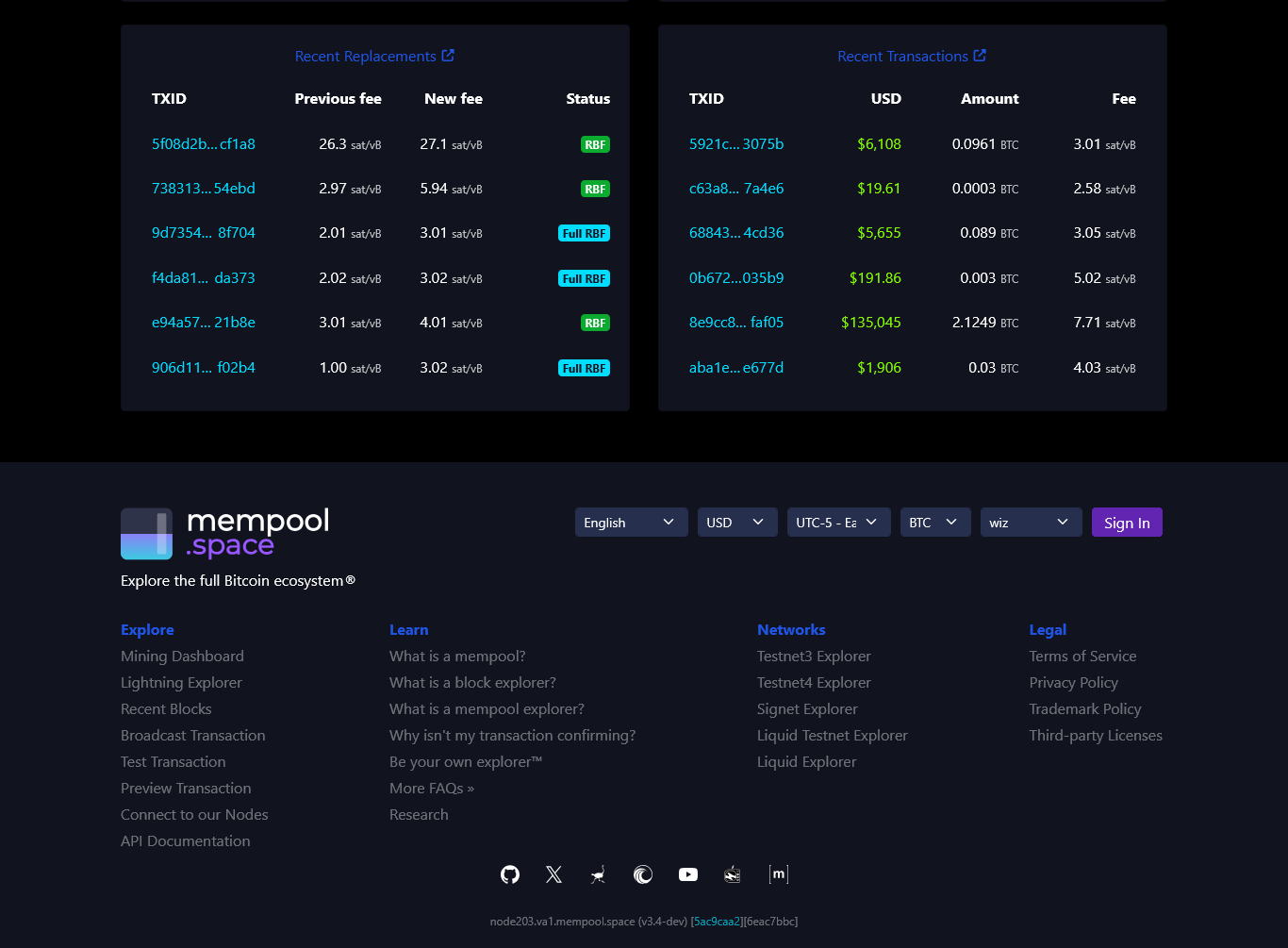
. Replace-by-Fee (RBF) in Bitcoin lets a sender resend the same transaction with a higher fee.
. This helps users speed up stuck transactions by making them more attractive to miners.
If supported, nodes will replace the older version in their mempool with the updated one.
Mempool size and visibility
Mempool size is often used as a real-time indicator of network demand. A large mempool typically means:
1. High transaction activity 2. Potential fee spikes 3. Slower confirmation times.
// Many blockchain explorers visualize mempool data, showing pending transactions, fee distributions, and congestion levels.
Why the Mempool is important
The mempool plays a critical role in blockchain performance and economics:
1. It acts as a buffer between transaction creation and confirmation.
2. It enables fee-based prioritization of transactions.
3. It helps maintain network stability under load.
4. It provides transparency into network demand.
Without mempools, blockchains would struggle to handle fluctuating traffic efficiently.
Summary ://
The mempool is essentially the “waiting area” of a blockchain network, where unconfirmed transactions compete for inclusion in the next block. It is a key mechanism that enables decentralized fee markets, transaction ordering, and scalability under variable demand.
Whether you're sending a simple transfer on Bitcoin or interacting with smart contracts on Ethereum, your transaction will almost always pass through a Mempool before becoming part of the permanent blockchain record.

AI Website Software